Research

3

First Author Papers

23

Total Papers

250,000+

Stars Studied

Education

Bachelor's in Physics

August 2013 - May 2017
University of Utah

Ph.D. in Astronomy

August 2017 - March 2023
New Mexico State University

Data Scientist

March 2023 - now
Space Telescope Science Institute

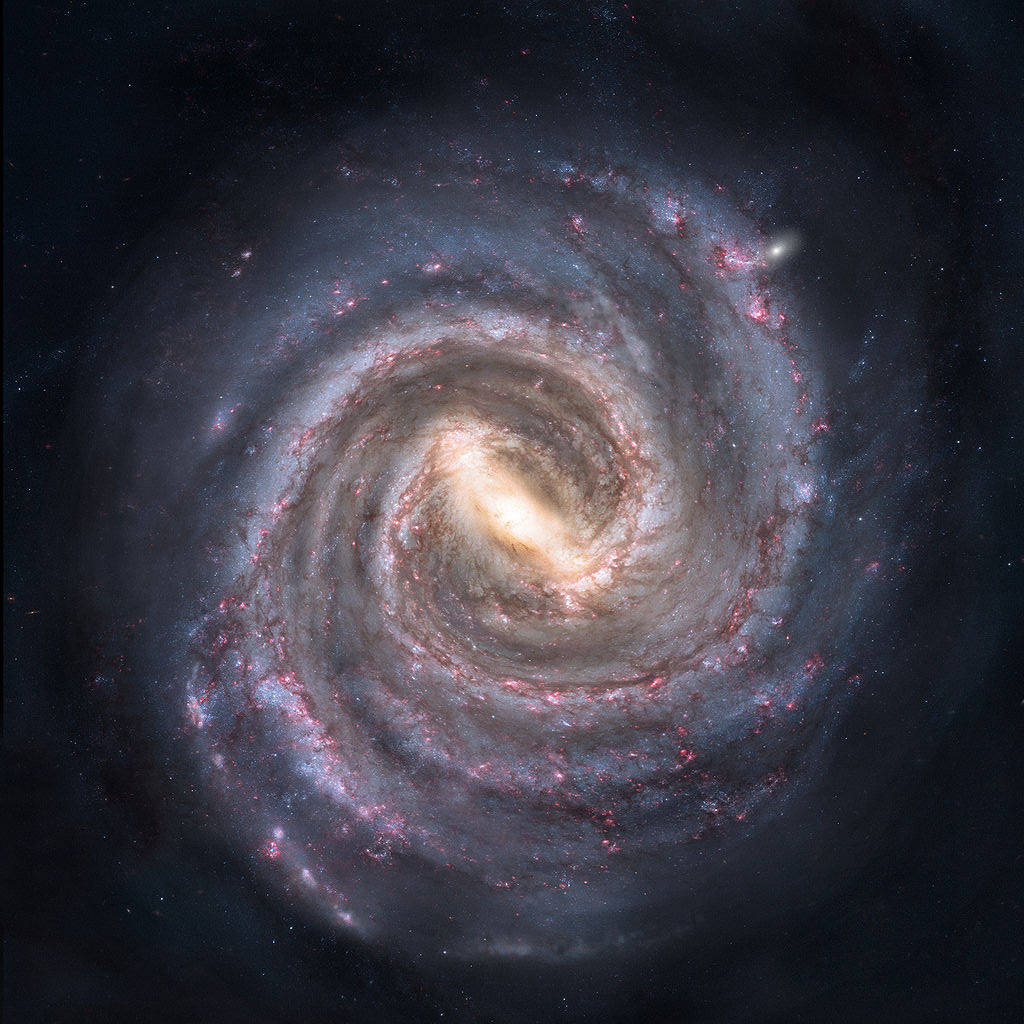
Milky Way as a Galaxy

The fields of Galactic and extragalactic astronomy are separated by an inherent incongruity in observational techniques. The Milky Way is studied through resolved stellar populations, wherein the ages, kinematics, chemical abundances, and precise distances to millions of individual stars can be determined with great accuracy. External galaxies are observed through integrated light: the cumulative contribution from millions of stars at once. My current research looks into how the Milky Way's properites manifest themselves on a holisitic scale, exploring new constraints on the integrated properties of the Milky Way, and highlighting the differences between the mass-weighted and light-weighted manifestations of our Galaxy’s characteristics.
The SDSS Legacy Archive at MAST

At STScI, I have played a lead role in building the SDSS Legacy Archive at MAST, adding 50 TB of SDSS data into the Mikulski Archive for Space Telescopes.

Large Scale Data Visualization

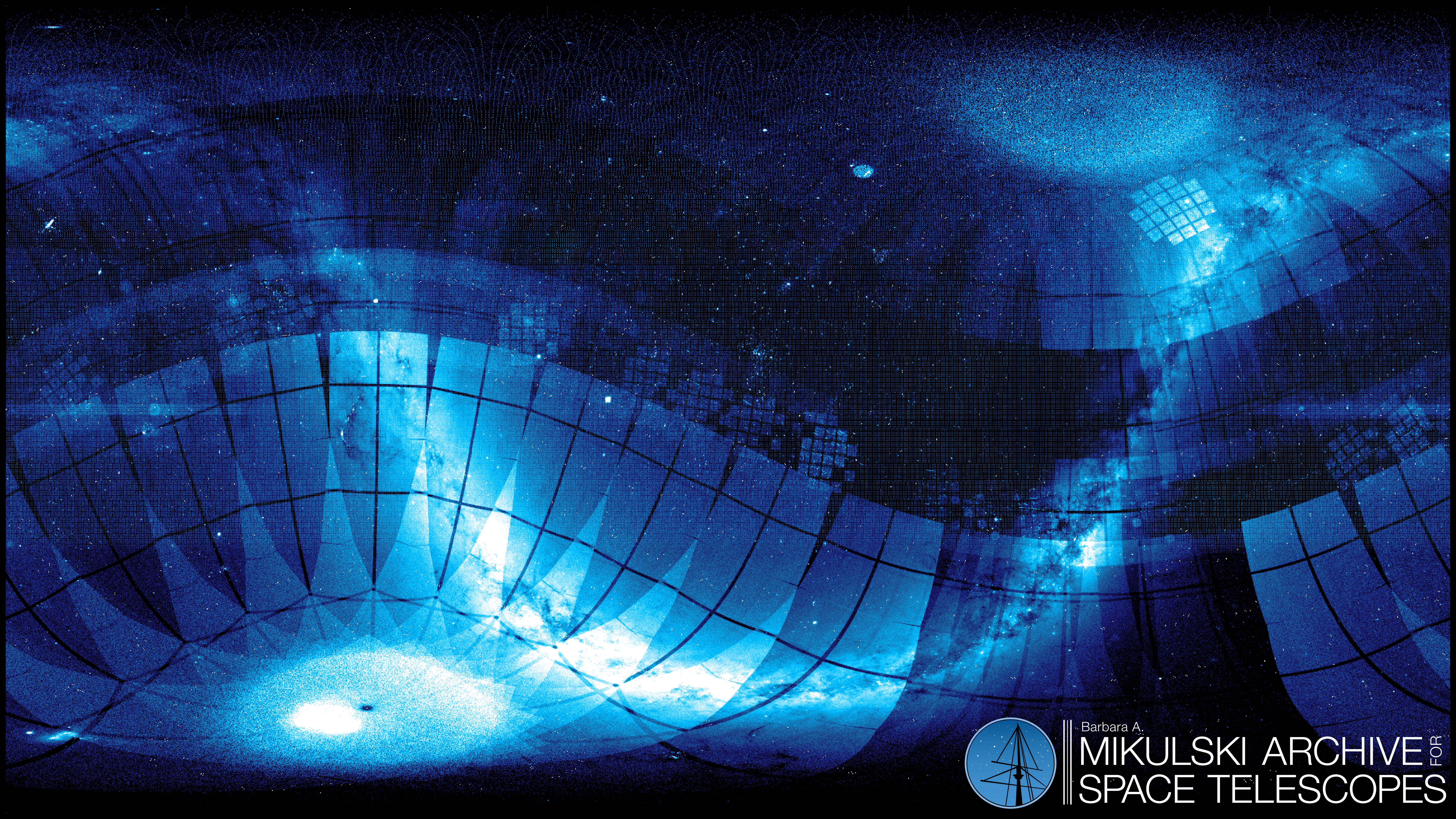
As a data scientist, I've worked on developing data visualizations for large sets of data, creating a heatmap for MAST by combining the 300 million observations (over 5 PB of data) into visuzalitions for both analysis and outreach.

Mapping the Milky Way

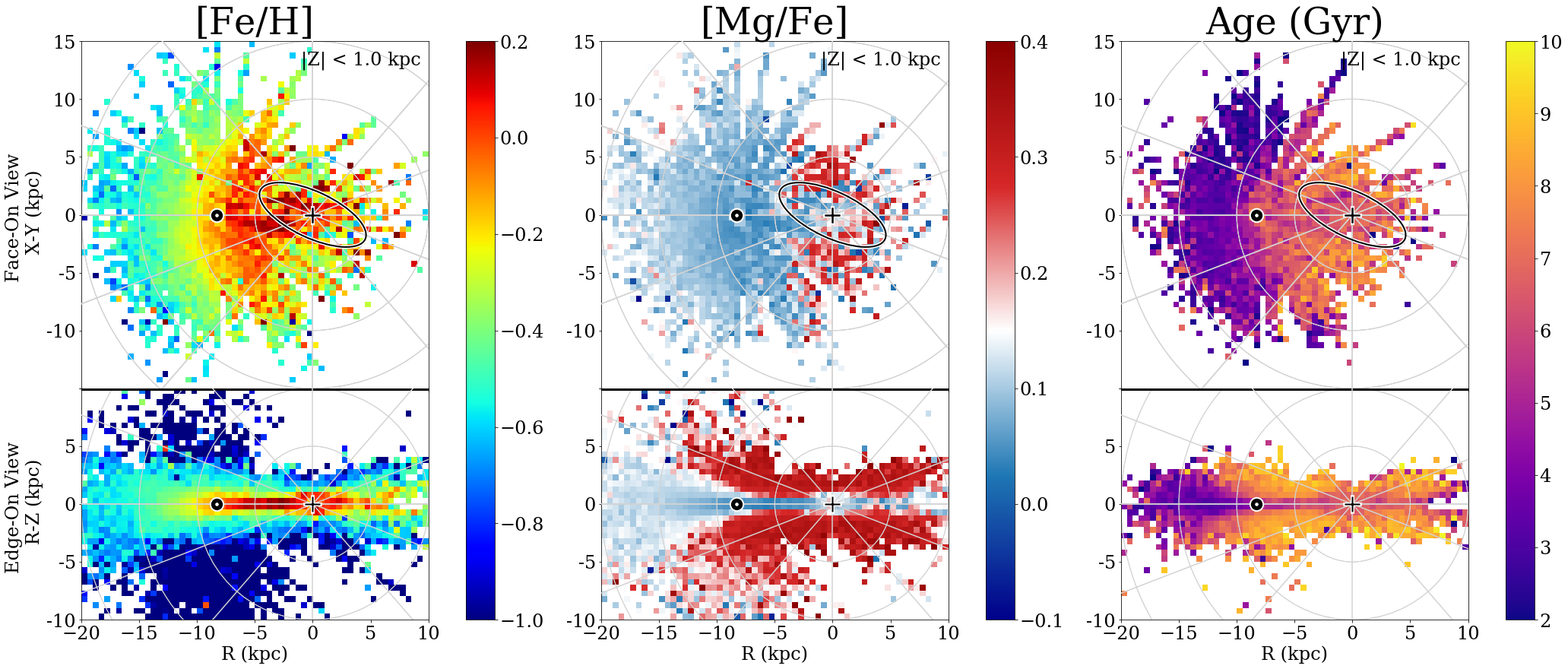
Mapping the Milky Way using the ages and chemical compositions of individual stars is the key to unraveling the history of our Galaxy. In this project, we explore radail and vertical gradients, quantify the distribution functions for age and metallicity, and explore chemical clock relations across the Milky Way. These results act as critical constraints on galactic evolution models, further constraining which physical processes played a dominant role in the formation of the Milky Way disk.

MaStar Stellar Library

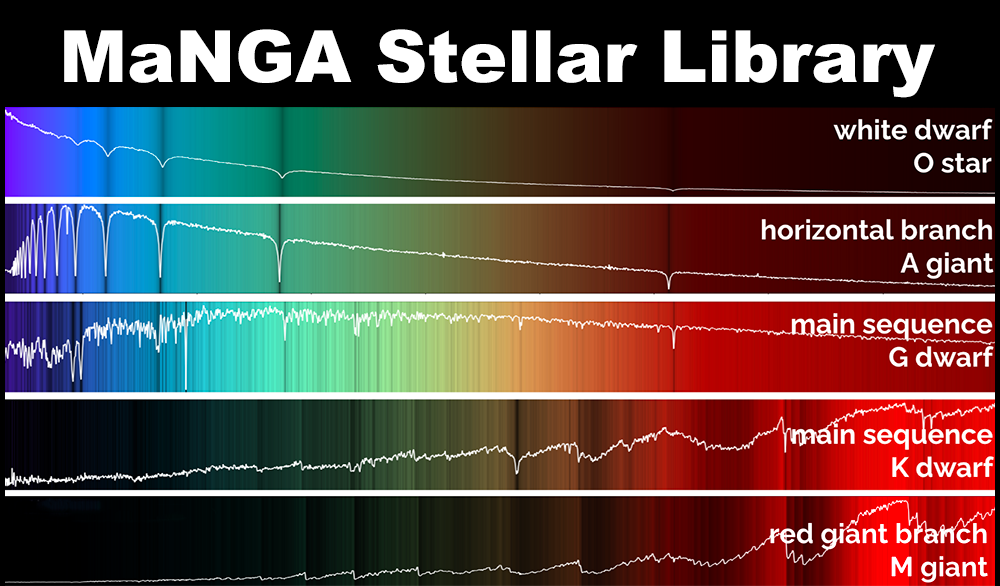
I was involved in the creation of the MaNGA Stellar Library (MaStar), an empircal stellar library of over 20,000 stars observed with the same instrument as used in the MaNGA survey. My contribution has been focused on stellar parameter derivation using machine learning techniques.